 |
Medical Professionals
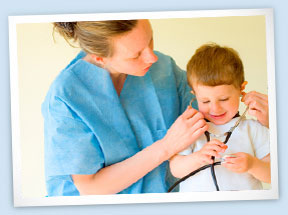 Despite the fact that dental caries is nearly 100% preventable1, it remains the most common chronic childhood disease – five times more common than asthma and seven times more common than hay fever2. Caries is a saliva-mediated infectious disease often passed from mothers to their babies when they kiss and share food3. Perinatal and young child oral health is of great significance because children who suffer tooth decay often experience a life-long struggle with chronic disease and pain. Tooth decay not only severely impacts systemic health4 but also our communities through lost school and work hours and increased healthcare costs5. Early Childhood Caries (ECC) is a severe, particularly virulent form of dental caries that afflicts children birth to preschool age and impacts disproportionally ethnic and racial minorities and children living in poverty. Children suffering from ECC often experience pain, dental abscesses, failure to thrive, poor self-esteem, poor nutrition, lost school hours and sometimes even death6,7. Due to the developmental status of a young child, the devastating effects of ECC are typically treated with dental rehabilitation under general anesthesia in a hospital or outpatient setting. Sadly, rehabilitation of a child’s mouth under general anesthesia does not “cure” the disease and 53%8 of children have new dental decay within the next 2 years with an average of 17% requiring general anesthesia and rehabilitative services again. In addition to the human cost, there is a very real financial cost to society. Though regional differences occur, the cost to rehabilitate one child suffering from ECC under general anesthesia can easily approach $10,0006 with a significant portion of children requiring this type of care utilizing publicly funded dental insurance. In order to address what the office of US Surgeon General has referred to as a “silent epidemic”, leading health organizations, including the American Dental Association (ADA), the American Academy of Pediatric Dentistry (AAPD) and the American Academy of Pediatrics (AAP), have all agreed that comprehensive dental care should begin no later than age one10,11. These organizations strongly support the use of caries-risk assessment (CRA) tools to establish personalized oral disease prevention plans for pediatric patients and their caregivers11,12,13. Additionally, organizations such as the ADA, AAPD, the American Collage of Obstetrics and Gynecology (ACOG) and American Academy of Periodontology (AAP) have all recommended that good oral health should begin before birth and that women should obtain and maintain dental health during pregnancy11,12,14,15. Medical professionals are essential partners in improving oral health for perinatal and pediatric patients. Physicians and their auxiliaries can be strong advocates for oral health as a vital component to general health and provide many oral health based services including visual oral screening, Caries Risk Assessment (CRA) with complementary fluoride varnish application (physician only), oral health anticipatory guidance and education, and referral to an AbCd Montana certified dentist. To learn more about perinatal and infant oral health for medical professional see our links the right!!! 1) The American Academy of Pediatric Dentistry. AAPD Cite ways to prevent risk for children’s tooth decay. http://www.mychildrensteeth.org/oralhealth/prevent/ Accessed October 7th 2012.
|
Infant/Toddler Oral Health
|
